
The new DACHSER magazine is here!
Nobody can predict the future—not politicians, not scientists, and not economists. However, that doesn’t mean we can give up the constant task of classifying current developments, tracking trends, and drawing the appropriate conclusions for tomorrow. This requires us to look closely, ask questions—and, most importantly, listen. That might sound obvious, but it can be a real challenge in day-to-day business.
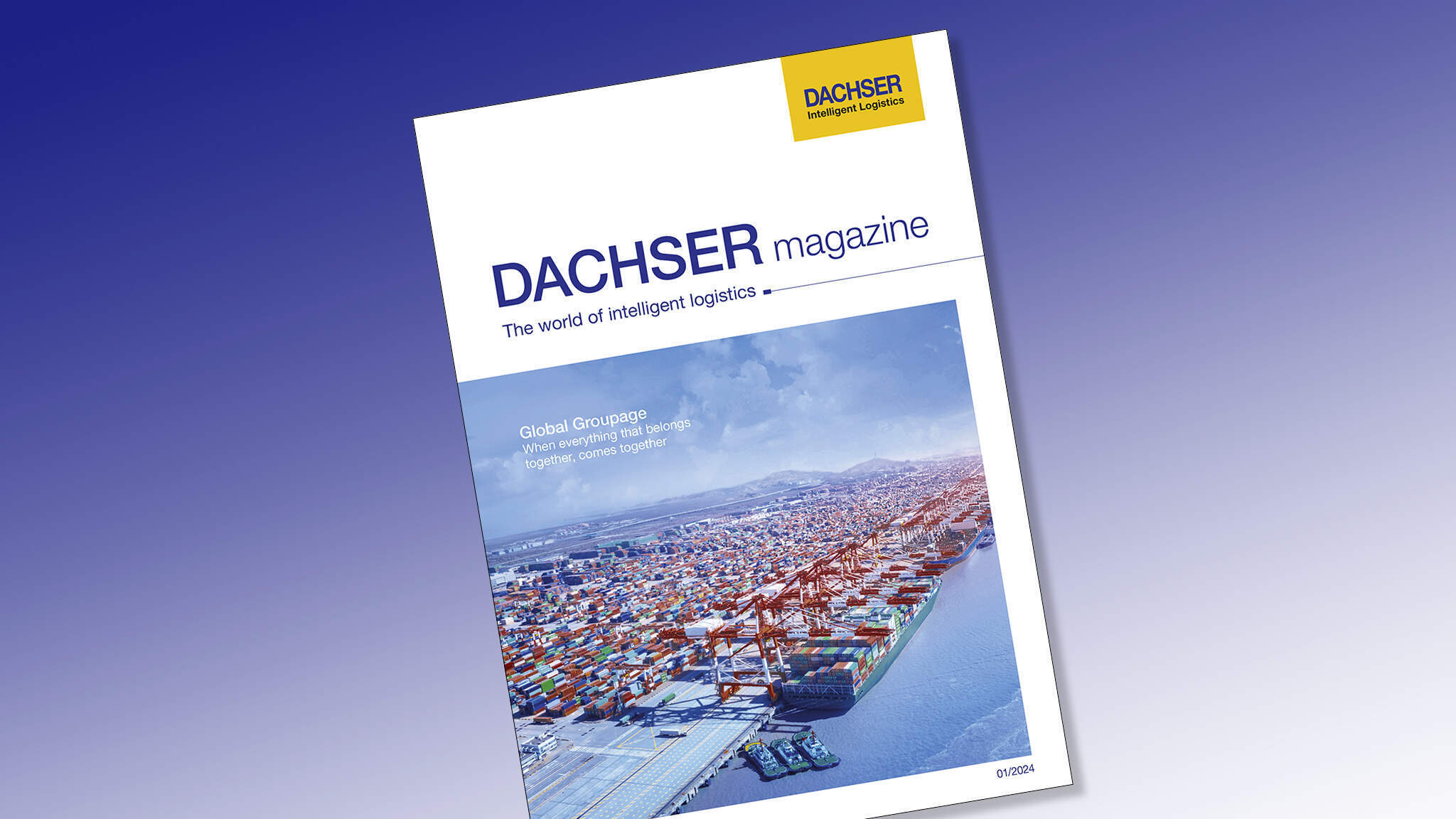
Listening carefully to understand tomorrow today—that’s what the stories in the new DACHSER magazine are all about. The cover story highlights future economic development scenarios, the resulting needs of our customers, and what DACHSER is doing to meet them—summarized under the keyword Global Groupage: an optimal integration of global end-to-end groupage transports and contract logistics solutions. In the interview, COO Air & Sea Logistics Dr. Tobias Burger provides an update on current and future developments in air and sea freight. You can read more about that starting on page 6.
Building up a complete picture of market potential and customer requirements, listening carefully, and acting accordingly—this approach is also reflected in the article on DACHSER Food Logistics. Starting on page 16, you can find out how the Food Logistics business line is making itself fit for the future by expanding its international network and investing in technology and climate action.
The global pandemic has taught us many things—but above all, perhaps, that the best way to help customers in difficult times is to really listen to their concerns and then offer the right solution. Our collaboration with Le Creuset, the renowned manufacturer of cookware, provided more evidence of this truth. During lockdown, many people around the world turned to cooking—and demand exploded for the French company’s high-quality products. Turn to page 26 to read about how our colleagues were on hand, how they listened carefully, and what exactly they did.
Building up a complete picture of market potential and customer requirements, listening carefully, and acting accordingly—this approach is also reflected in the article on DACHSER Food Logistics. Starting on page 16, you can find out how the Food Logistics business line is making itself fit for the future by expanding its international network and investing in technology and climate action.
The global pandemic has taught us many things—but above all, perhaps, that the best way to help customers in difficult times is to really listen to their concerns and then offer the right solution. Our collaboration with Le Creuset, the renowned manufacturer of cookware, provided more evidence of this truth. During lockdown, many people around the world turned to cooking—and demand exploded for the French company’s high-quality products. Turn to page 26 to read about how our colleagues were on hand, how they listened carefully, and what exactly they did.
Your personal copy and our archives
You’ll find these and many other stories in this issue. Pick up your personal copy at your branch or download the PDF here. We hope that you enjoy reading the new issue of the DACHSER magazine.
You can also browse through previous issues of the DACHSER magazine.
You can also browse through previous issues of the DACHSER magazine.
Bookmark article

Contact
Ali Mahboob
Digital Communications Manager Asia Pacific
+91 022 42328-247
mahboob.ali@dachser.com